August 23, 2026
Taiwan’s Pandemic-Era Retail Trading Boom: A Lasting Market Shift
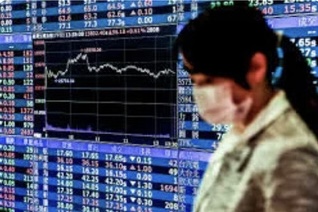
How COVID-19 reshaped participation, liquidity, and concentration in Taiwan’s capital markets
The COVID-19 pandemic, which began almost 6 years ago and officially ended over 2 years ago, disrupted many aspects of business and plunged economies into chaos. Taiwan’s stock market was no exception, with skyrocketing growth in retail participation having caused a boom in overall stock-market activity. This was due to many reasons: low policy rates, more retail access to online trading, an increase in spendable assets, and other complex factors such as the success of major companies such as TSMC.
So, what happened?
Well, trading activity spiked significantly in 2021 and didn’t fizzle away. Taiwan’s trading volume and values spiked throughout the pandemic years, peaking in 2021.1 The Taiwan Stock Exchange Fact Book notes that the total trading volume was around 1.497 trillion shares, and that the daily average trading value specifically boomed in 2021. Of course, trading volume and values did eventually fizzle down, but they didn’t fizzle away—they remained notably above pre-pandemic levels.
Furthermore, not only did activity spike, but so did the opening of new accounts and active participation among previously inactive users. Statistics tracking “effective trading accumulated account holders,” which can be seen as representative of new trading accounts opened in Taiwan, extended to over 13 million—an enormous number, especially given Taiwan’s small population.
To get into the specifics of shares and trading, margin trading expanded, and the retail leverage increased. In 2021, TWSE’s numbers reveal that margin purchases and securities-margin trading share began to increase. This implies that not only were more individuals trading, but they were also using borrowed funds to do so. Again, the margin activity did die down in later years, but this spike left a lasting impact on the liquidity and tail risk of the market.2
Additionally, the market began to cluster around the tech industry, especially Taiwan’s renowned TSMC. This allowed for benchmark indices to be notched a few pegs. This clustering was fueled by the rapidly increasing demand for AI chips, which caused TSMC’s market value to soar, an increase in overall index gains, and gave it a place among the world’s largest firms.3
So as a result of all this, Taiwan’s trading efficiency improved, lifting the Taiwanese market higher among global rankings. Specific improvements noted by the TWSE include a larger market size (as earlier mentioned), higher average monthly transaction value, and again, an elevated interactional ranking that reflects structural improvements in trading, along with activity increases.4
Why did this happen?
Other than the obvious factors of a low-rate environment and abundant liquidity, which urged investors to contribute to riskier assets, there were many factors that drove individuals to invest more.5
First of all, a possible driver is social media. Influencers were successful at their purpose of influencing people, creating a tide that became bigger and more influential with every collected wave of people willing to try out or become more active in investing.6 Secondly, lockdowns meant fewer opportunities to spend money. These accumulated savings served as newly available investable cash for individuals. Also, global policy rates were low throughout the pandemic, making equities attractive for retail savers who wanted returns more substantial than what bank interest could offer them.
And, last but not least, TSMC. The huge demand for chips caused by AI resulted in high expectations for semiconductor profits. This disproportionally benefited the Taiwanese market since Taiwan is the largest producer of semiconductors globally, and served as another set of hands pushing individuals to invest more.7
What were the implications of this? Were they mostly positive or negative? Pinpointing all of the implications and labelling them as positive or negative is complicated, but here is a short, oversimplified list:
Positive effects
An increase in household participation in capital markets
An increase in capital available for more innovative firms
Improved liquidity (and price discovery)
Negative effects
The risk of overconcentration and the fragility of valuation
Leverage and margin risks, amplifying forced liquidations
Increased volatility, mispricing
Risks for inexperienced investors
Ultimately, this boom in retail investing is still relevant because the effects caused by the surge didn’t end along with the pandemic. Trading behavior today is still influenced by what investors learned back then. Additionally, understanding the “how” and “why” of the increase is significant. AI demand continues to rise, and Taiwan’s technology sector is becoming more and more vital to the global market. So, margin exposure and tech-sector concentration could easily resurface as major issues in the future.
By: Sihyun P.
1: https://www.twse.com.tw/downloads/zh/about/company/factbook/2025/3.01.html
2: https://www.twse.com.tw/downloads/zh/about/company/factbook/2025/3.01.html
3: https://www.reuters.com/technology/artificial-intelligence/ai-frenzy-takes-taiwans-tsmc-record-peak-puts-it-trillion-dollar-club-2024-07-11/?
4: https://www.twse.com.tw/market_insights/en/preview/8a8216d6942a222b01943e63e3460064?
5: https://www.cbc.gov.tw/tw/mp-1.html
6: https://www.sciencedirect.com/science/article/pii/S105905602500560X?