August 13, 2026
Taiwan’s Dramatic Increase in Defense Budget for 2026
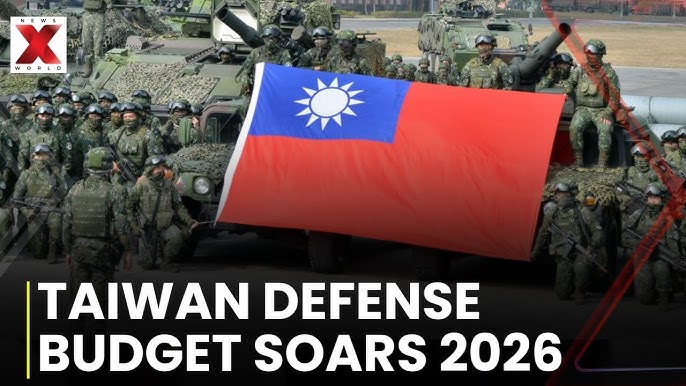
Yielding to pressure from the U.S., Taiwan is set to increase its defense budget to 949.5 billion New Taiwan Dollars in 2026, which is equivalent to over 31 billion dollars in U.S. currency. This will be the first time in over a decade that Taiwan’s defense budget exceeds 3% of its GDP.
The current, distressing political state of Taiwan isn’t lost to anyone who keeps an eye on international relations. In recent months, the People’s Liberation Army of the People’s Republic of China has been sustaining an increased naval and aerial presence around the island of Taiwan. Employing their infamous Grey-zone tactics*1, the PLA has been fostering a persistent high-tension environment around China-Taiwan relations, setting the U.S. and its Asia-region allies on edge. As a response to China’s provocative theatrics, the U.S., specifically President Donald Trump, has been pressuring Taiwan to expand its defense budget as a means to ramp up deterrence efforts.2
*Grey-zone tactics refer to the ambiguous space between peace and overt warfare. Grey-zone tactics often consist of a heightened military presence as a form of intimidation, and also include cyberattacks, election meddling, disinformation campaigns, and economic disruption through the undermining of valuable supplies.
Yielding to pressure from the U.S., Taiwan is set to increase its defense budget to 949.5 billion New Taiwan Dollars in 2026, which is equivalent to over 31 billion dollars in U.S. currency. This represents a 22.9% increase compared to 2025—an enormous jump for a single-year increase in budget. Setting the defense budget to over 949 billion NTD means that the defense spending will be well over 3% of Taiwan’s GDP, closer to 3.32%.3 This will be the first time in over a decade that Taiwan’s defense budget exceeds 3% of its GDP. The last time Taiwan’s GDP exceeded 3% was in 2009, under former Chinese Nationalist Party (KMT) president Ma Ying-Jeou.4
However, it should be noted that Taiwan will adopt a NATO model of calculating defense expenditures in 2026. NATO-style metrics incorporate spending on veteran support and coast guard administration in defense expenditures, and the inclusion of the latter is attributed to their having to deal with China’s grey-zone incursions. The defense budget for 2026 will be 2.84% if we take out the traditionally excluded costs of spending on veteran support and Coast Guard administration. This also decreases the exaggerated single-year increase from 22.9% to 20.1%, a much lower yet still striking increase.5
There is no consensus regarding whether this increase in defense budget was a necessary choice or an unnecessarily ambitious misstep. Figures such as United States President Donald Trump have contended that Taiwan needs to refrain from being overly dependent on American military backing, therefore making it likely that said figures see this increase as a positive development.6 However, the Institute of National Defense and Strategic Research reveals survey results stating that 65% of Taiwanese believe it to be unlikely that China will attack within the next five years, making it likely for locals to be reproachful about the sudden and stupendous change.7 After all, the 20+% increase in spending for defense needs to be subtracted from other areas of spending—infrastructure, welfare, and other priorities that citizens may find benefit them more directly.
Taiwan’s current demographic situation is a possible complication in this dilemma. As Taiwan is one of the fastest-aging societies in the world, social welfare is incredibly important yet severely underfunded. Even by 2016, public sector and labour pension liabilities had ballooned to 9 times the national budget, adding up to a total of around $570 billion U.S. dollars.8 So, this puts into perspective how important and already lacking Taiwan’s social welfare funds are, and why, at this point in time, safeguarding the social welfare budget may be a better strategy. Any more national budget deducted from social welfare could result in not only severe consequences in the form of inadequate social programs but also in intensifying social discontent.*
*Read Nathan’s article about Taiwan’s aging society and its implications here: https://taiwanfinanceeconomics.substack.com/p/silver-hair-wave-taiwans-aging-population
Yet, despite the possible cuts in government spending for social welfare, the build-up in defense investment could stimulate the economy by invigorating domestic industries and companies. Taiwan’s many, globally competitive, high-tech sectors—semiconductors, aerospace, cyber-defense—will all likely benefit from the increased procurement and R&D spending that will accompany this change.9 If Taiwan can successfully overcome issues such as significant arms delivery delays10 and major GDP growth reductions due to legislative gridlocks on defense spending,11 both of which have been prominent issues in the past, this change could be beneficial for relations with the U.S., domestic industries, and bolster deterrence.
In the end, there’s no definitive answer to whether or not this sharp increase in defense budget was a wise and strategic modification, or if it was a fatal misstep that may be costly to the Taiwanese people and economy. However, we will soon see the effects of it and how it shapes the lives of locals in Taiwan, domestic businesses, and international relations.
By: Sihyun P.
1: https://www.reuters.com/world/china/taiwan-massively-hike-2026-defence-budget-us-presses-spending-increase-2025-08-21/
2: https://apnews.com/article/china-taiwan-us-defense-budget-b15c2dc87297627a2ac12ea344fe94b8
3: https://www.reuters.com/world/china/taiwan-massively-hike-2026-defence-budget-us-presses-spending-increase-2025-08-21/
4: https://www.taipeitimes.com/News/front/archives/2025/08/22/2003842464
5: https://thediplomat.com/2025/08/taiwans-government-eyes-expanded-defense-budget-at-3-3-of-gdp/
6: https://apnews.com/article/china-taiwan-us-defense-budget-b15c2dc87297627a2ac12ea344fe94b8
7: https://thediplomat.com/2025/08/taiwans-government-eyes-expanded-defense-budget-at-3-3-of-gdp/
8: https://www.benefitscanada.com/news/bencan/do-taiwans-cuts-to-public-sector-pensions-offer-lessons-for-canada/
9: https://www.ainvest.com/news/taiwan-defense-spending-surge-unlocking-geopolitical-driven-opportunities-tech-industrial-sectors-2509/
10: https://warontherocks.com/2025/03/taiwans-biggest-limitation-in-defense-isnt-spending-its-late-deliveries-from-u-s-defense-companies/
11: https://www.taipeitimes.com/News/editorials/archives/2025/03/04/2003832827