October 17, 2026
From Silicon Island to the AI Era: Taiwan’s Rise in AI Chips
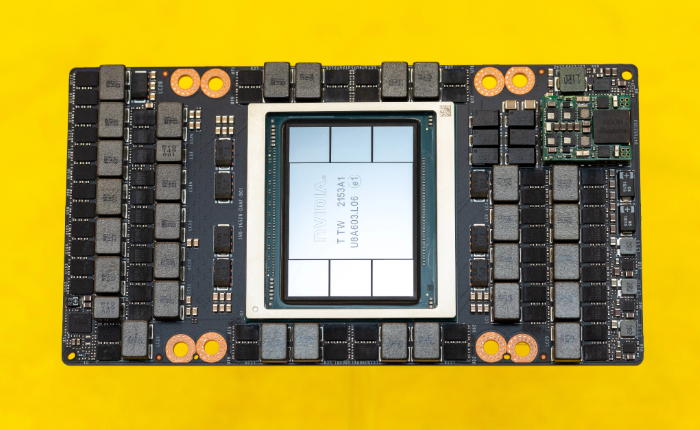
Ever wondered how AI chatbots like ChatGPT can respond to your questions in just seconds but feeling overwhelmed by all this talk about computer chips? Don’t worry! This article breaks down simply of Taiwan’s rise as a global leader in AI chip manufacturing, exploring how it all began, the role of companies like TSMC and NVIDIA, and why these tiny chips have such a huge impact on our everyday lives.
Have you ever wondered why is it that everytime we give an AI chatbot like ChatGPT a command- whether it is answering a question, generating an image, or translation support- it responds in merely seconds? We owe this phenomenon to a tiny (but powerful) piece of technology known as the computer chip. Today, Taiwan plays a major role in producing these advanced chips that make artificial intelligence possible.
In this article we will explore the history of the AI chip in Taiwan and how it gained such a pivotal role in our global technology industry today.
Taiwan’s semiconductor journey began long before the AI boom. In the 1970s, the Taiwanese government recognized that technology had the potential to help develop the economy. Not long after in 1973, The Industrial Technology Research Institute (ITRI) was established to support research as well as train engineers. Taiwan also brought in semiconductor technology from the United States in order to help local engineers develop the skills needed to manufacture computer chips. However, the most important milestone of this whole process came in 1980 when Hsinchu Science Park was established. Hailed as comparable to Silicon Valley in the US, the park attracted various technology companies, researchers, and talented engineers- creating an environment where new ideas grew into successful businesses.
In 1987, Morris Chang founded Taiwan Semiconductor Manufacturing Company, or what we now know as TSMC with a unique business model in mind: Instead of designing and selling its own branded chips, TSMC would focus on manufacturing chips designed by other companies, allowing their business to concentrate solely on inventing new technologies without needing to build costly factories. This revolutionary idea gradually allowed TSMC to become one of the world’s most important chip manufacturers.
For many years, Taiwan’s chips were essential to a wide variety of tech products such as smartphones, computers, cars, and gaming consoles to say the least. However, with the rapid development of AI in recent years comes a new wave of demand. AI systems require immense computing power in order to learn from information and recognize patterns to generate responses. Thus, specialized processors (like graphic processing units ‘GPUs’) were essential for these tasks since they could perform the many calculations needed simultaneously. As a result, companies such as NVIDIA designs these powerful chips for AI while TSMC manufactures these chips using their advanced production technology. This strategic partnership allowed the 2 companies- despite their different roles- to rise as global powerhouses as AI becomes increasingly prevalent in our world through the recent years.
However, we must not attribute Taiwan’s success at a global scale to just simply having 2 famous companies. Instead, we should look back at the decades Taiwan has invested in education, research, and engineering. The massive boom in success of this industry also created various skilled jobs that contributed massively to the Taiwanese economy, connecting Taiwan to technology companies and consumers around the world. Thus, when demand for AI grows, the effects can be felt across Taiwan’s factories as well as laboratories.
This success also brings multiple challenges: Building advanced chip factories costs billions of dollars and manufacturing requires enormous amounts of electricity and carefully controlled water supplies. Taiwan must also adapt to navigate international competition as well as geopolitical tensions that could disrupt global chip production.
As AI continues to develop, the demand for faster and more energy-efficient chips is likely to remain important. Taiwan’s future will depend on continuing to innovate and train the next generation of engineers to make manufacturing more sustainable and efficient. So the next time you hear the word “AI chip”, don’t underestimate the term- the chips powering the AI revolution may be tiny, but their impact is unparalleled.
By: Megan Chen
https://web.sipa.gov.tw/english/
https://www.tsmc.com/english/dedicatedFoundry/services/advanced-packaging
https://blogs.nvidia.com/blog/category/generative-ai/
https://itritoday.itri.org/114/content/en/unit_01-2.html
https://globaltaiwan.org/2026/06/taiwans-semiconductor-success-more-than-tsmc/